Skills You'll Practice
The specific skills the exercises are built around
Each module pairs a short lesson with a hands-on worksheet, so you're practicing the actual moves: briefing, researching, drafting, editing, scoping, not just watching someone else do it.
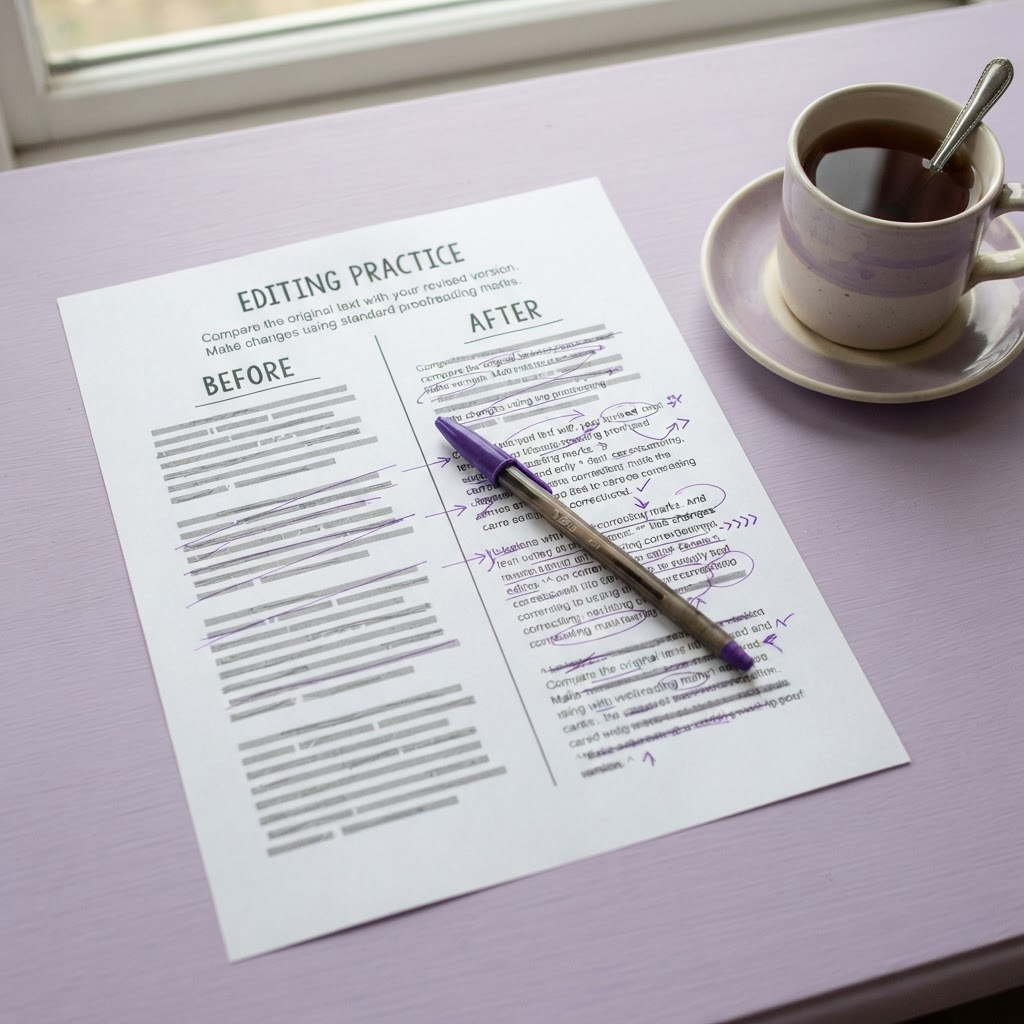
Practice artifact
A sample of the kind of before-and-after editing exercise used in the training, a labeled educational worksheet, not a real client project.
Reading a brief like a professional
Before you write a word, you learn to pull the real assignment out of a client's request: the audience, the goal, the tone, and the boundaries, using a structured brief worksheet.
- Spotting the actual goal behind a vague request
- Turning a two-line email into a working brief
- Asking the right clarifying questions before you start
Researching the audience and the offer
You practice quick, practical research: who reads this, what do they already believe, and what would make them act, without turning it into a week-long project.
- Building a simple one-page audience snapshot
- Finding the one benefit that matters most
- Avoiding generic, could-be-anyone copy
Drafting headlines and body copy
This is the core craft: turning a message plan into a headline that earns attention and body copy that holds it, across formats like landing-page sections, emails, and product blurbs.
- Writing multiple headline angles for one brief
- Structuring a short landing-page section
- Drafting a three-email sequence outline
Editing for clarity, accuracy, and tone
You practice the editing pass that separates amateur drafts from client-ready copy: cutting clutter, checking claims, and matching the requested voice.
- A line-by-line self-edit checklist
- Fact-checking claims before they go out
- Matching a brand's tone from a short style note
Scoping and handing off work
Finally, you practice the business side: defining a small, clear scope, setting a revision limit, and handing off a finished piece the way a working copywriter would.
- Writing a simple scope-of-work paragraph
- Setting sensible revision limits upfront
- Packaging a sample for a starter portfolio
Want the full breakdown of every module?
Request the curriculum and we'll send you the module-by-module outline, including the practice deliverable for each one.